How the 2026 Lexus TX’s AWD Reacts to Fall’s Wet and Slippery Roads
September 18 2026,
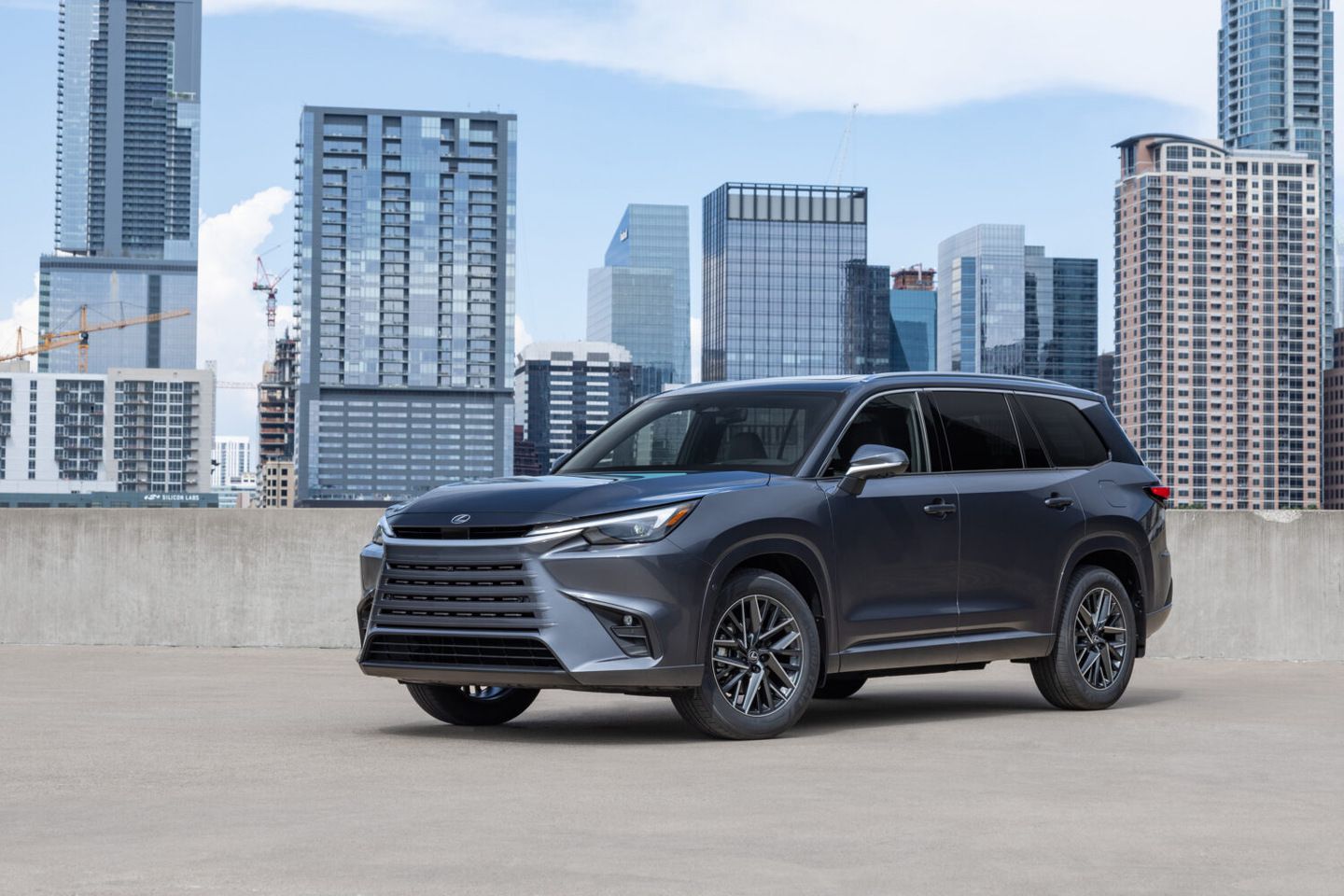
Wet leaves on the road, a sudden rain squall, the first frosty mornings of the season: fall driving in Ontario asks more of a vehicle than most people notice until traction disappears for a second.
The 2026 Lexus TX is built with that moment in mind. Both the TX 350 and TX 500h use all-wheel drive to keep power going where the road actually allows it, not just where the driver expects it.
What AWD On The TX Actually Means
All-wheel drive is a traction-and-stability system, not a winter-only or off-road-only feature. It works every time the tires meet a surface with uneven grip: a puddle on one side of the lane, a patch of wet leaves, loose gravel at a stop sign.
The TX 350 uses Electronically Controlled Full-Time All-Wheel Drive paired with a 2.4 L turbocharged four-cylinder engine making 275 hp and 317 lb-ft of torque, run through an 8-speed automatic transmission. The system also includes Trail Mode for low-traction surfaces.
The TX 500h swaps that setup for the DIRECT4 AWD System, standard on the hybrid, working with a 2.4 L turbocharged four-cylinder hybrid powertrain rated at 366 hp and 409 lb-ft of torque through a 6-speed automatic. Both drivetrains send power to all four wheels continuously; the difference is how that power gets there.
How The Two Systems Behave Differently
The TX 350’s full-time AWD reacts to available traction as it’s detected, redirecting torque toward the wheels with the most grip when the system senses slip. It is a straightforward, continuously active setup that suits drivers who want predictable, gas-powered pull for commuting and highway stretches.
DIRECT4, on the TX 500h, adds electric motor torque into the mix. Because electric motors respond to inputs faster than a purely mechanical drivetrain, DIRECT4 can shift torque distribution between the front and rear axles more finely as grip changes mid-corner or mid-lane-change. That translates into a different driving feel: the hybrid can adjust its front/rear torque split through a bend or during a lane change on wet pavement in the time it takes the driver to react to the same conditions.
Both vehicles use Vehicle Stability Control and a Traction Control System (TRAC) to back up the AWD hardware, along with Hill-start Assist Control. On the TX 350, Drive Mode Select and available Adaptive Variable Suspension let the driver match the chassis to the surface underneath.
Why This Matters On A Wet Autumn Commute

Most traction loss on Ontario roads in the fall doesn’t happen on ice. It happens on wet pavement covered in leaves, or during the first cold snaps when road surfaces turn slick without any visible warning. AWD matters at every stage of a drive, not just at takeoff.
At a stop sign or on-ramp, AWD reduces wheel spin by sending torque to whichever wheels have grip. Through a steady highway cruise, it keeps the chassis settled if a lane shifts from dry to wet. In a corner or a lane change, particularly one made quickly to avoid standing water, torque distribution changes how planted the TX feels through the wheel.
The TX’s ride height also plays a role here. Ground clearance sits at 201 mm (7.9 in.) on the TX 350, and the higher seating position that comes with a three-row SUV body gives a clearer view of standing water, fallen branches, and lane markings that grow harder to see on grey, overcast afternoons.
Exterior lighting adds another layer of confidence at dusk and in poor visibility. The TX 500h includes Bi-Beam LED Headlamps, LED Fog Lamps, and Rain Sensing Wipers as standard equipment, while higher trims add an Auto Leveling Headlamp System and Adaptive High-Beam system. Heated side mirrors, standard on the hybrid, help keep mirror glass clear when rain and cooler temperatures combine.
Who Benefits Most From Each System
Families doing daily school runs and suburban errands get straightforward value from the TX 350’s full-time AWD: predictable, always-on traction without needing to think about drive modes. Its 68 L (18 gal.) fuel tank and 11.5 L/100km combined fuel economy suit drivers covering mixed suburban and highway distances through the week.
Drivers who spend more time on higher-speed roads, or who simply want the sharper responsiveness of continuously adjusting torque through corners and lane changes, get more from the TX 500h. Its 8.6 L/100km combined fuel economy pairs with the added responsiveness of DIRECT4, at the cost of a step up in price.
Both configurations offer a 5,000 lb (2,268 kg) towing rating on select trims, along with seating for up to seven and up to 2,747 L of cargo space behind the front seats, so the choice between them comes down to how the power gets to the road rather than what the vehicle can carry.
See The TX’s AWD Systems For Yourself This Fall
The 2026 Lexus TX pairs full-time AWD on the TX 350 with the faster-reacting DIRECT4 system on the TX 500h, giving Ontario drivers two ways to manage grip through wet and changeable fall conditions.
Visit Lexus of Lakeridge in Ajax to sit in both the TX 350 and TX 500h, ask about their AWD systems in person, and book a test drive to feel the difference on the road yourself.