2026 TX Towing Capability and Confidence for Your Trailer Needs
June 26 2026,
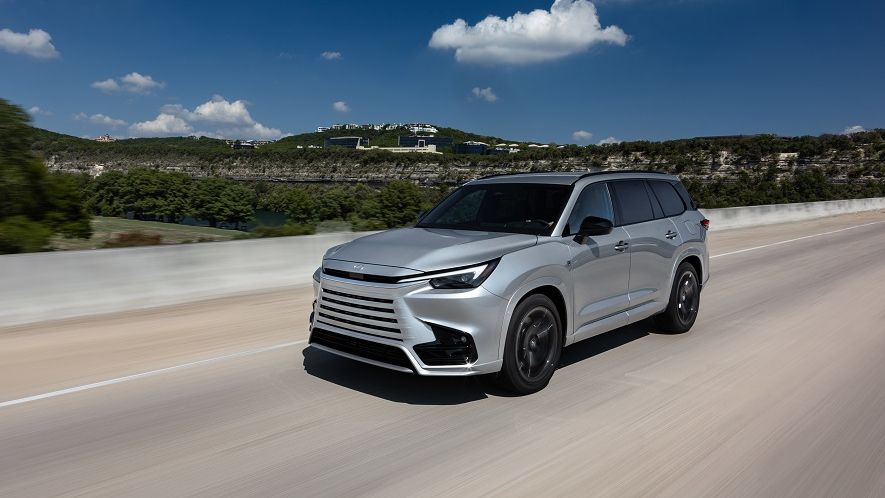
Cottage season in Ontario puts real demands on a family SUV. Whether you’re hauling a boat to the dock or pulling a loaded cargo trailer, 5,000 lbs (2,268 kg) of towing capacity changes what’s possible on a weekend. The 2026 Lexus TX is rated for exactly that, and the engineering behind it goes well beyond a number on a spec sheet.
Two powertrains, a rigid GA-K platform, and a suite of active stability systems make the TX a serious towing vehicle wrapped in three-row luxury. Here’s how it all works together.
What Makes 5,000 lbs Feel Manageable
Towing confidence starts with the platform. The TX is built on the GA-K architecture, which gives it optimal weight distribution, a low centre of gravity, and a wide stance. That matters when a trailer is pushing and pulling the rear of the vehicle on an uneven highway ramp or a gravel camp road.
Both powertrains bring AWD to every TX, so power reaches all four wheels regardless of surface. The TX 350 uses electronically controlled full-time AWD; the TX 500h uses the Lexus DIRECT4 system, which actively distributes torque front-to-rear based on wheel speed, steering angle, and acceleration. Under trailer load, DIRECT4’s real-time adjustments help keep the vehicle planted rather than simply splitting power 50/50.
Suspension also plays a role in trailer stability. The TX 350 rides on an independent MacPherson strut front and a 4-link rear setup with coil springs. Front and rear stabilizer bars are standard on both powertrains; the TX 500h adds front and rear performance rods as standard equipment, while the TX 350 offers a front performance rod as an available option.
Adaptive Variable Suspension (AVS), which dampens trailer-induced body movement, is available on the TX 350 and standard on the TX 500h.
The Two Powertrains: Torque Is the Towing Number That Matters
|
TX 350 |
TX 500h |
|
|
Engine |
2.4L turbo I4 |
2.4L turbo I4 hybrid |
|
Horsepower |
275 hp |
366 hp |
|
Torque |
317 lb-ft |
409 lb-ft |
|
Transmission |
8-speed automatic |
6-speed automatic |
|
AWD |
Full-time electronic AWD |
DIRECT4 AWD |
|
Fuel economy (combined) |
11.5 L/100 km |
8.6 L/100 km |
|
Max towing |
5,000 lbs (2,268 kg) |
5,000 lbs (2,268 kg) |
Both engines hit the same 5,000 lb (2,268 kg) towing ceiling, but the TX 500h’s 409 lb-ft of torque arrives lower in the rev range than the TX 350’s 317 lb-ft. That difference shows up at launch: getting a loaded trailer moving from a stop sign or a steep boat launch is noticeably easier when torque peaks at 3,000 RPM rather than 3,600 RPM.
The TX 350 is no slouch. Its turbocharged 2.4L engine pulls steadily, and the 8-speed automatic manages grades well. For families towing a mid-size trailer or a small watercraft, it handles the task without drama.
Stability and Safety Systems That Work Under Load

The TX comes standard with Vehicle Stability Control (VSC), Traction Control (TRAC), and Hill-start Assist Control (HAC). VSC actively manages wheel slip and body roll; HAC holds the vehicle on an incline while you transition from brake to throttle, which is particularly useful when hooking up or unhooking on a sloped driveway.
Lexus Safety System+ 3.0 runs across both variants and includes a Pre-Collision System with pedestrian and bicycle detection, Dynamic Radar Cruise Control with Curve Speed Management, and Lane Departure Alert with Steering Assist. Blind Spot Monitor with Rear Cross Traffic Alert is standard on both, which is meaningful when a trailer limits your rearward sightlines.
Braking hardware matters too. Both the TX 350 and TX 500h come with front ventilated disc brakes, rear disc brakes, ABS, Electronic Brake Force Distribution (EBD), Brake Assist, and an Electronically Controlled Brake System (ECB). That combination shortens stopping distances and distributes brake force appropriately when extra weight is pushing from behind.
Trail Mode, available on both powertrains, adjusts throttle response and AWD torque distribution for low-traction surfaces: packed gravel, soft shoulders, or a muddy cottage lane in spring.
Who Gets the Most from the TX’s Towing Capability
The TX makes the most sense as a towing vehicle for families who need all three rows in regular use and only occasionally pull a trailer. The 1,625-litre cargo area behind the second row and up to 97 cubic feet with both rows folded mean it doubles as a capable hauler even without a trailer attached.
For buyers who tow frequently and want the smoothest experience, the TX 500h is the stronger fit. The higher torque output, DIRECT4 AWD, and standard AVS and performance rods give it more tools for managing a loaded trailer. The F SPORT Performance 2 + Towing Hitch and F SPORT Performance 3 + Towing Hitch configurations add the Class IV towing receiver hitch directly; the TX 350 F SPORT 3 + Towing Hitch does the same on the gas side.
The 1,500W inverter, available on the TX 500h F SPORT Performance 3 and Performance 3 + Towing Hitch, adds a convenient power source for equipment at the campsite or worksite.
For buyers who tow occasionally and want a lower entry point into the TX lineup, the TX 350 F SPORT 3 + Towing Hitch covers the full 5,000 lb (2,268 kg) rating with the hitch included.
Ready to Tow: The 2026 Lexus TX at Lexus of Lakeridge
The 2026 Lexus TX pairs a genuine 5,000 lb (2,268 kg) tow rating with a GA-K platform, active AWD, and a full suite of stability and braking systems designed to keep the vehicle controlled when a trailer is in tow. Both the TX 350 and TX 500h earn that rating; the hybrid adds torque and standard suspension upgrades for buyers who tow regularly.
Visit Lexus of Lakeridge in Ajax to explore TX 350 and TX 500h configurations, ask about towing hitch packages, and schedule a test drive to feel how the TX handles under load.